
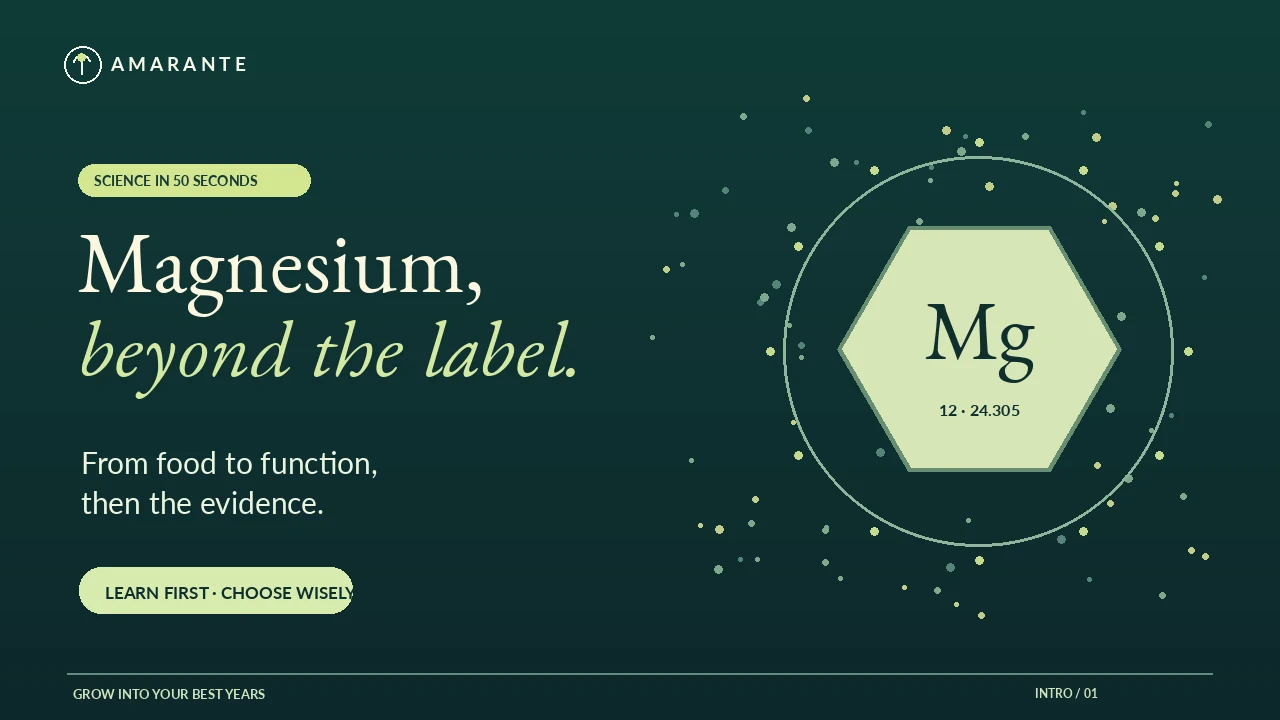
Start at the table.
Legumes, leafy greens, nuts, seeds and whole grains can provide magnesium alongside other nutrients.
AMARANTE / VISUAL EXPLAINER
A calm, caption-led introduction to magnesium—created to inform, not to sell a product.
52 seconds · 1280 × 720 · Silent, with on-screen text
Magnesium is essential for normal muscle and nerve function, bone health and energy metabolism. Foods like leafy greens, legumes, seeds, nuts and whole grains provide magnesium. Supplement labels show the amount of elemental magnesium, which differs from the compound weight. Some formulations vary in absorption and gastrointestinal tolerability. The recommended intake depends on age and sex. Correcting low intake differs from expecting general sleep or energy benefits. Supplements can cause diarrhea and interact with medicines; kidney impairment increases concern. In the United States, the adult supplemental upper limit is 350 mg/day unless otherwise recommended by a clinician. Learn first, choose wisely.
MAGNESIUM / AT A GLANCE
Legumes, leafy greens, nuts, seeds and whole grains can provide magnesium alongside other nutrients.
The supplement amount listed as magnesium (mg) is what you compare—not simply the weight of a citrate or glycinate compound.
High-dose supplements can cause diarrhea and may interfere with medicines. Kidney disease changes the risk.
Scientific background: NIH ODS magnesium evidence review ↗. Examples are for general education, not personal dosing advice.
Magnesium participates in many normal physiological functions, including nerve and muscle function.
Dietary intake may be inadequate for some people. Whether a supplement helps depends on the individual’s situation and the specific outcome studied.
Magnesium oxide, citrate and glycinate are different compounds. The amount of elemental magnesium and tolerability matter; a form is not automatically superior for every purpose.
Higher supplemental intakes can cause diarrhea and other symptoms. Kidney impairment can increase risk, and magnesium may interact with certain medicines, including some antibiotics and bisphosphonates.
Explore the NIH Office of Dietary Supplements consumer fact sheet and health professional review. They explain dietary intakes, forms, limitations, medicine interactions and the supplemental upper limit.
THE NUTRITION CONNECTION
How does this nutrient connect with everyday habits, dietary variety and healthy ageing? Explore our evidence-first Blue Zones guide—without assuming supplements are a shortcut to longer life.